Stone worktops come with a surprising amount of baggage.
Not the kind you pack for holidays, but the myths and misconceptions people pick up from well-meaning friends, internet forums, and that one person who swears their granite is stained permanently from a single drop of red wine.
Read on to learn what the myths and reality behind stone worktops.
Myth 1:
Stone worktops stain easily and permanently
This myth persists because it contains a grain of truth that’s been blown wildly out of proportion.
First off, natural stone is porous to varying degrees. For example?
- Marble is more porous than granite
- Granite is more porous than quartz (which is engineered and barely porous at all).
However, porosity doesn’t mean your worktop will stain very easily. Properly sealed granite and marble resist staining remarkably well. The “staining” people worry about usually comes from not sealing the stone properly in the first place or never resealing it.
Quartz worktops don’t need sealing at all because they’re engineered to be non-porous. Spill red wine, coffee, or beetroot juice on quartz, and it wipes off without any drama. Even with granite and marble, most spills wipe away cleanly if you don’t neglect them.
The reality:
Seal natural stone properly and maintain it sensibly, and staining won’t be the issue people make it out to be.
Myth 2:
You can’t put hot pans on stone
Granite and quartz both handle heat exceptionally well. However, manufacturers recommend using trivets for quartz as a precaution, as extreme, sudden temperature changes could theoretically cause issues.
Marble is slightly different – not because it’s fragile to heat, but because thermal shock from very hot items on very cold stone might cause hairline cracks over time. Overall, this is one where common sense prevails – you shouldn’t put red-hot pans on stone just because you can.
The reality:
Stone handles heat better than almost any other worktop material. Trivets are sensible. Exercise common sense when handling very hot pans straight from the stove.
Myth 3:
Stone worktops are too expensive
Expensive compared to what? Laminate, yes. Solid wood, sometimes. But when you factor in longevity, the equation changes considerably.
A laminate worktop might cost £100 per metre and last perhaps ten years before looking tired. Replace it twice over twenty years, and you’ve spent £200 per metre plus installation costs twice. A granite worktop might cost more than double the price per metre, but it will look good for decades with basic care.
Plus, stone is very desirable and contributes to your home’s long-term value.
The reality:
Stone represents investment rather than expense. You’re paying once for something that lasts rather than paying repeatedly for replacements.
Myth 4:
Stone requires constant maintenance
“Constant maintenance” is an exaggeration. But stone does need TLC. In most cases, this involves:
- Wipe spills when they happen
- Clean with mild soap and water or stone-specific cleaner
- Reseal granite or marble every 1-3 years, depending on use (takes about 30 minutes)
- Avoid harsh chemical cleaners
In practice, resealing granite or marble once every couple of years doesn’t constitute “constant maintenance” by any reasonable definition. Quartz doesn’t need resealing at all.
The reality:
Stone worktops need less maintenance than most people imagine, and what maintenance they do need is straightforward.
Myth 5:
Stone is too heavy for normal kitchen units
Of course, stone is heavy. Granite and marble weigh roughly 60-70kg per square metre. Quartz is similar. This raises concerns that kitchen cabinets can’t support it or that structural work will be needed.
Standard kitchen cabinets designed for worktops handle stone weight without issues. Very occasionally, older kitchen units or particularly lightweight flat-pack furniture might need reinforcing, but this is unusual.
The reality:
Properly constructed kitchen cabinets handle stone worktops fine. Weight is a consideration during installation, but not a barrier for normal kitchens.
Myth 6:
All stone looks cold and formal
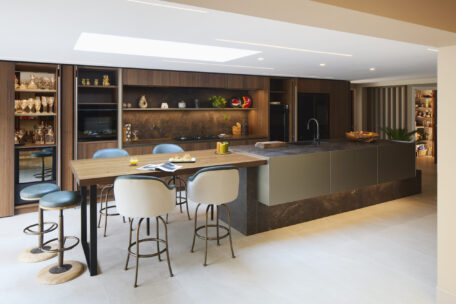
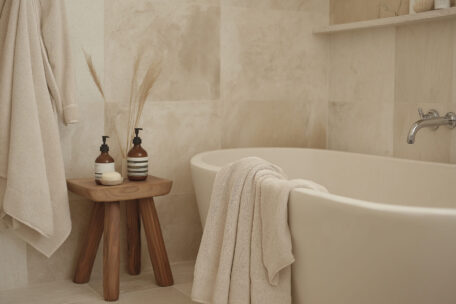
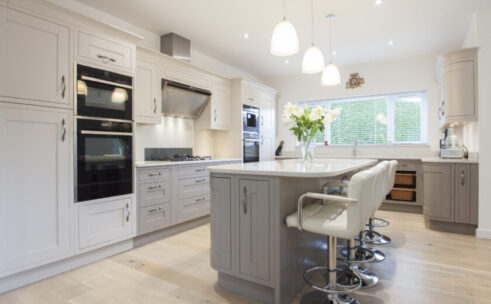
Stone comes in an extraordinary variety. Warm browns, soft creams, rich golds, subtle greys, dramatic blacks – and that’s before you consider the different patterns and finishes. A honed finish looks completely different from a polished finish.
Ultimately, stone doesn’t dictate a single aesthetic – it adapts to virtually any style depending on which stone you choose and how you finish it. So it can absolutely look warm and inviting.
The reality:
Stone offers enough variety in colour, pattern, and finish to suit any aesthetic from traditional farmhouse to sleek contemporary.
STONE FOR YOUR NEXT PROJECT
Rather than worrying about myths, focus on considerations. Which stone suits your cooking habits? Do you need the durability of quartz or the natural variation of granite? Does your design call for marble’s luxury or limestone’s subtlety? What maintenance level are you comfortable with?
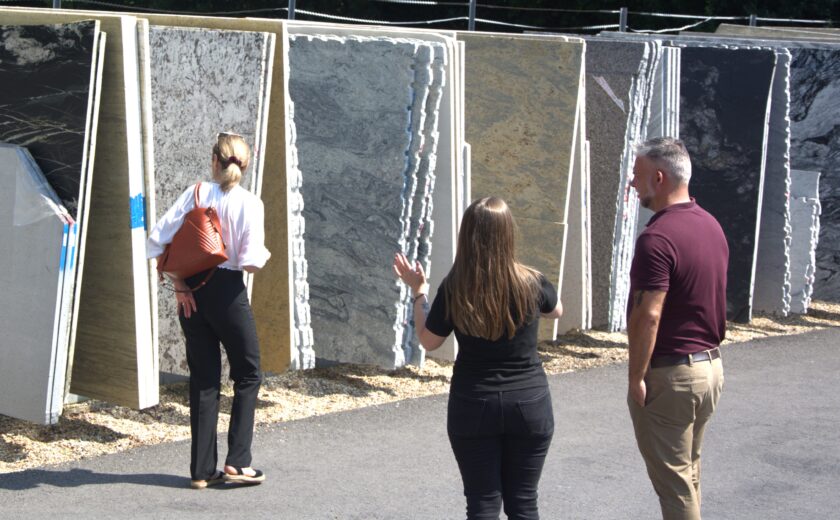
At Landford Stone, we stock over 2,800 slabs in our Wiltshire yard. We can show you how different stones behave, which ones suit your specific situation, and what maintenance they require. Contact our team to arrange your visit.