Stone looks beautiful on its own, but when combined with other materials, it creates rooms with greater depth and character.
The trick is understanding which combinations work and why, so your kitchen or bathroom feels intentional rather than like you’ve thrown every material sample at the wall to see what sticks.
Here’s how to pair stone with wood, metal, and glass to enhance each material rather than cluttering.
Why mixing materials works
Stone brings weight and permanence, but too much – as with any material – risks overwhelming a space. Consider combining it with other materials:
- Wood introduces warmth
- Metal adds clean lines and reflection
- Glass brings lightness where stone creates visual weight
When you thoughtfully combine these materials, the benefits tend to compound.
Pairing stone with wood
This combination is timeless because both materials are inherently natural, yet strongly contrasting. Stone is cool and solid. Wood is warm and organic.
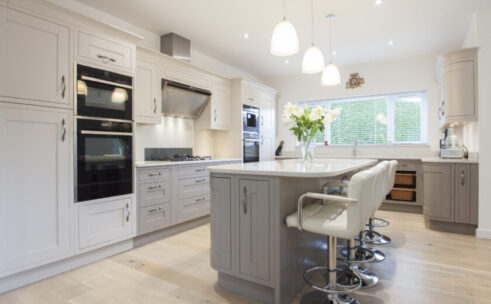
Light wood cabinets with darker granite or quartz worktops work because:
- The pale wood stops the stone from dominating
- The stone adds weight that wood alone wouldn’t provide
- The combination feels grounded without being heavy
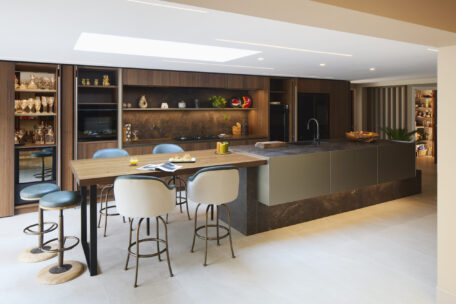
Flip it – dark walnut cabinets with lighter marble or limestone – and you’ve created equally effective contrast working in the opposite direction.
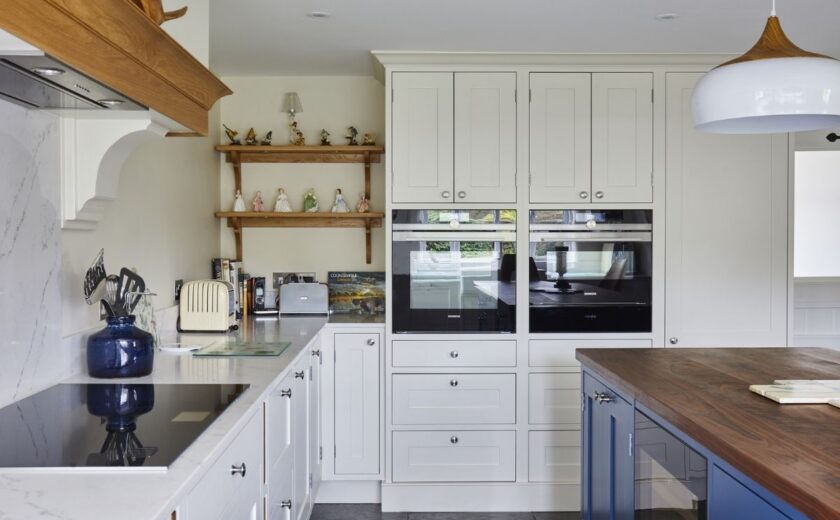
Wooden shelving against stone backsplashes adds another layer. The horizontal grain contrasts with vertical tile installation, preventing the static look that comes with too much uniformity.
Introducing metal for clean lines
Metal contrasts beautifully with stone’s organic patterns. This pairing tends to feel more contemporary, though it works in traditional schemes depending on the finish you choose.
In kitchens, stainless steel against granite or quartz has become standard, but the specific finish changes everything – brushed brass against white marble feels completely different from chrome against black granite.
Some practical metal pairings to consider include:
- Black metal cabinet handles against lighter stone for sharp definition
- Brass or copper against darker stone for warmth
- Metal shelving brackets creating floating stone shelves
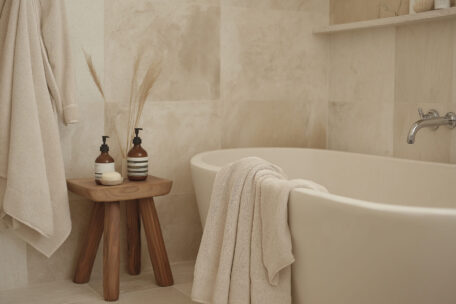
- Matt black or brushed brass bathroom fixtures against marble or limestone
Using glass to maintain light
Glass adds transparency where stone creates weight, which helps in smaller spaces or anywhere you need to keep natural light flowing through the room.
In kitchens, glass works several ways:
- Glass splashbacks behind stone worktops protect walls whilst bouncing light around
- Clear versions keep focus on the stone, tinted or back-painted glass adds colour
- Glass-fronted wall cabinets prevent the heaviness solid doors create
Bathrooms benefit even more from this pairing. Frameless glass shower screens with stone walls and floors create that desired spa-like feel. The glass essentially disappears, letting the stone be the feature whilst keeping the room feeling open and bright.
Selecting stone that works with your vision
The stone you choose needs to work with whatever else is in the room, which is trickier than it sounds.
A polished black granite that looks stunning on its own might fight with dark walnut cabinets. Creamy limestone that seems bland by itself could be spot-on against the wood or metal you’ve chosen.
There’s no formula for this – it depends on your specific materials, lighting, room size, and what you’re trying to achieve.
If you’re planning a kitchen or bathroom and are set on stone, contact our friendly team.